Osteoarthritis

Osteoarthritis (OA), aka degenerative joint disease, is a slow progressive inflammatory disease of joints characterised by degradation of the cartilage, thickening of bone margins, and changes in the synovial membrane. The end result of this process is painful and stiffen joints. Unfortunately it cannot be cured, but managed and usually involves a multimodal approach.

OA can affect any joint of any breed of dog and cat, even though large and giant breed dogs are the most commonly thought of when OA comes to mind. Common clinical signs of OA noticed by owners are usually: pain and stiffness while the animal is running, walking, jumping, or rising from a lying or sitting position; reluctance to walk and jump, lameness, favouring limb and aggressiveness.

Examination of the pet includes observation of the pet walking/running from a distance and complete orthopaedic exam in which the affected joints are checked for alignment, range of motions, presence or absence of pain inflammation, swelling, or crepitus. A neurologic exam is also performed assessing the patient’s conformation, balance, gait, muscle loss.

The next step in investigating OA involves imaging of the affected joints. The most common is radiography. Radiographs are usually done under sedation or general anaesthetic and they can reveal calcification within and around the joint, often appearing as new bony formations called osteophytes. Another diagnostic tool is arthroscopy, a minimally invasive procedure that allows you to see changes in the joint before they become apparent in radiographs. It is also used as a therapeutic procedure (allows removal of loose fragment of bone, cartilage and ligaments) and it requires a general anaesthetic.

The management of OA is aimed at minimising joint pain by reducing the inflammation and slowing the progression of cartilage damage, therefore promoting an increase in joint flexibility and quality of life. For this, the multimodal management approach relies on medical and non medical management. Medical management relies on use of nonsteroidal anti-inflammatory drugs (NSAIDs), chondroprotectants and adjuncts (opioids, tramadol, steroids, gabapentin, pentosan, for example); while the non medical management includes weight control/exercise, EPA-rich diet and physical rehabilitation.

It is also worth mentioning that sometimes surgery will be necessary to stabilise the joint prior to medical treatment.

Before starting treatment for OA it is important to perform blood work and a urine test (urinalysis) to rule out kidney disease as some of the medications for OA can be deleterious to the kidneys.


Have you noticed that your pet has been slowing down or seems stiffer than usual? Call 0423 600 618 and book an appointment with Dr Pat the Vet to have him checked over.
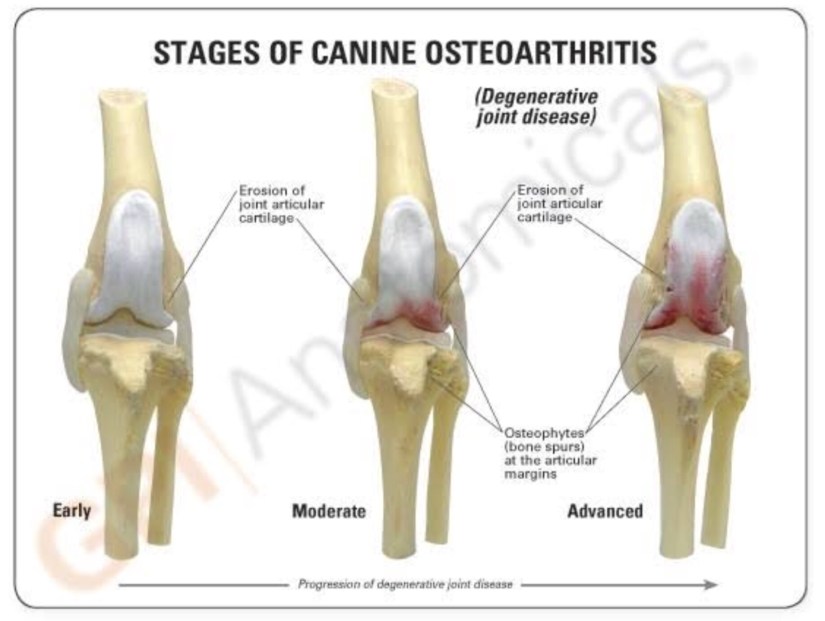
 

Stages of osteoarthritis dog

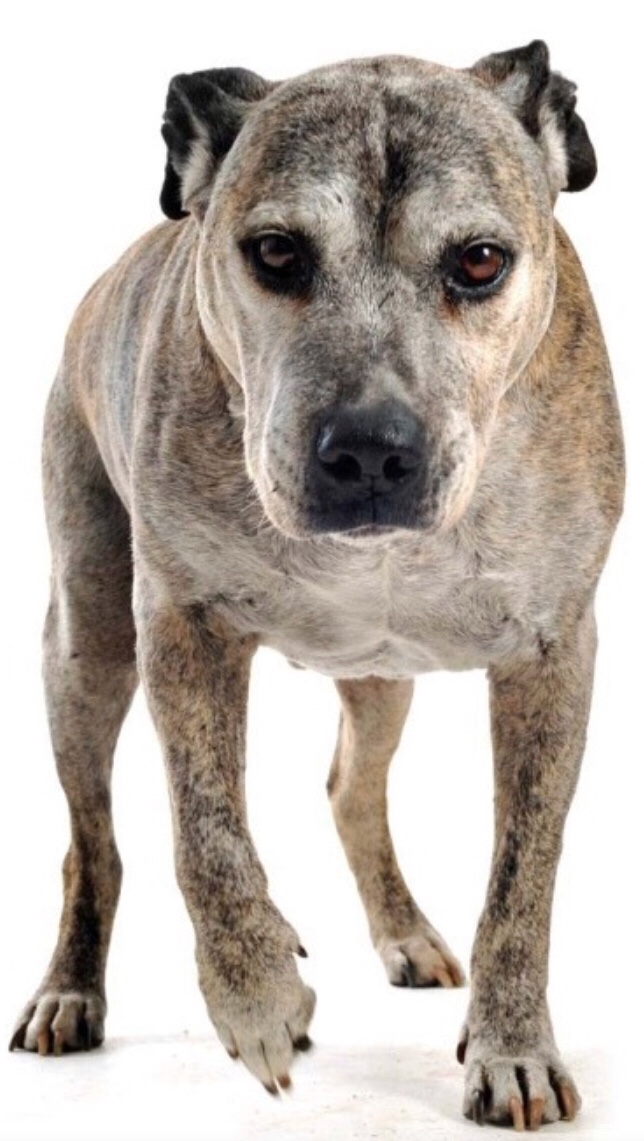
Dog arthritis

When is the right time to say goodbye?

When is the right time to say goodbye?

As a mobile veterinarian I get to do a lot of at home euthanasia, therefore I get asked the above question on a daily basis and despite hearing it a lot, answering it is never easy. To determine someone else’s quality of life can be a very hard task, especially when this someone cannot express in words what they are feeling.

I try to use parameters such as the ability to perform basic life functions – eat, drink, defecate and urinate – on their own to determine if there is quality of life, and therefore have an objective way of measuring it. For example, a pet that has always been food oriented and now has no interest whatsoever in food.

Another criteria I usually consider when deciding if it is time to euthanize a pet is its level of pain. Despite all the possible treatments available and undertaken to make the pet comfortable, is the pet still in discomfort or pain? Is the pet suffering from a condition or several conditions that it won’t recover from, despite all efforts? And the tendency is to continue to deteriorate?

Each pet and pet owner is different from one another. Different people will draw lines at different points. For some owners, having to attend to their pet’s needs and nurse them several times a day is something possible and they may be willing to change their lifestyle and routine to accommodate for this. But for some people, this is beyond of what they can do for their pet, either because it’s physically impossible or emotionally distressing. For example, a large dog that can’t walk and therefore would require assistance from its elderly owner to carry him around the backyard, several times a day, in order to do its business (defecate/urinate). The owner’s physical and emotional state also have to be taken into consideration when answering the above question.

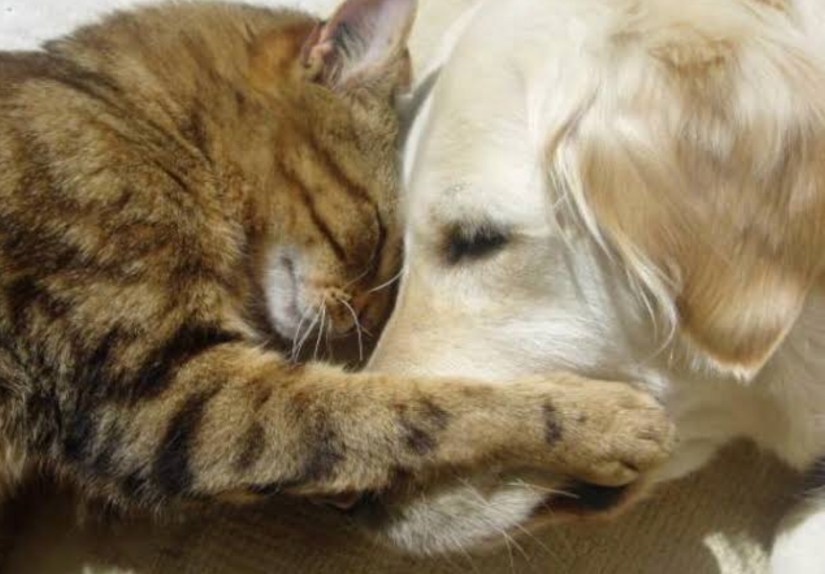
It’s never easy to say goodbye to a loved one, but fortunately we have the option of euthanasia, and halt the suffering a beloved pet might be going through. Only time to help heal the void left behind and unfortunately, for a while, there is going to be that question in your mind, was it the right time?Dog and cat goodbye

Atopic Dermatitis (Atopy)

Atopy, or allergic dermatitis, is one of the most common chronic skin disorders in dogs. It can be a frustrating disease to treat, as there isn’t a cure. The aim is to manage it the best way possible to avoid discomfort to the dog due to excessive itchiness (inflammation) and consequently, secondary skin infections with bacteria and/or yeast.

It is an inherited allergic reaction (over-reaction of the immune system) to environmental allergens (pollen, grass, mold, etc.) that are absorbed across the skin. To make the situation even worse, usually the affected animal may also have a defective skin barrier. Any breed or mix breed dog can develop atopy, but the breeds predisposed to developing it are: Golden Retrievers, Labrador Retrievers, West Highland White Terriers and other terriers, and Bulldogs. Usually dogs begin to show signs between one and three years of age.

Itchy dog

Dogs affected by atopy will usually display excessive itchiness, in which it will scratch, chew, lick, or rub areas of the body such as their face, paws, and rear end. This can lead to hair loss, reddening and thickening of the skin as well as self-trauma to the skin. The itchiness can be exacerbated in cases the dog develops secondary bacterial/yeast infection or has parasites such as fleas/mites. Therefore, it is important to take a step by step approach towards skin investigation, so that common things like fleas or bacterial infections aren’t overlooked, prior to establishing a diagnosis of atopy.

As previously mentioned, atopy is not cured, but managed, and my goal as a veterinarian is to decrease the dog’s discomfort from the excessive itchiness and improve its quality of life by tailoring a treatment plan that best suits his needs and your ability to administer it to him. Flare ups might happen from time to time, meaning the plan will need to be revised.

Treatment options usually involve supportive care (fatty acids, baths, antihistamines) with the addition of medications like corticosteroids, cyclosporine (Atopica), olacitinib (Apoquel), Cytopoint (CADI-immunomodulatory), and immunotherapy. Many of these treatments work better in combination to provide relief.

If you think your pet might be dealing with atopy don’t hesitate to book a visit with Dr Pat the Vet – call 0423 600 618. The sooner we start treating the better your dog will feel!